Showing posts with label Nutrient Solutions. Show all posts

Wednesday, August 18, 2010

Cobalt in Hydroponics : Better or Worse ?

On yesterday's article we talked about silicon, one of the most beneficial non-essential nutrients you can use in your hydroponic crops. Although Silicon has proved to give marked benefits in peer-reviewed scientific studies, other elements are usually commented on being beneficial without a thorough investigation around current scientific literature. One of this particular cases is Co, with this element being often portrayed as a way to "increase flowering" or "increase fruiting", something which studies have shown to be false for several different plant species. On today's article we will talk about cobalt, its potential use in hydroponics, the conclusions of the studies that have been done and the potential danger involved with the use of cobalt in hydroponic solutions.

Cobalt is a transition metal from the same group as Rhodium and Iridium with chemical properties similar -yet quite different- to these other elements. As a chemist specialized in the area of organometallic chemistry - and especially through my work with this group - I have always enjoyed the chemistry of this element. Cobalt has many uses in pigments, radiotherapy, batteries, etc. Biologically its most important role comes as the metal center of the vitamin B12, cobalamine, which is essential to human life. Vitamin B12 is a large coordination complex in which Cobalt is tightly bound by an organic macrocyle, interestingly enough, this is one of the very few examples of a carbon-metal bond in nature with one of the axial ligands of cobalamin being a methyl organic group (in methylcobalamin at least).
-

-
So now that we know that cobalt is an essential part of a vitamin, it may seem obvious to use it as a minor constituent of our hydroponic formulations. However careful studies have shown that - if cobalt is needed by plants - it is only needed in the most minute quantities with concentrations of only 5 ppm already being markedly detrimental to plant growth (L.Gómez shows this effect in two studies in both lettuce and tomato). Other studies in the lower concentration range (>5 ppm) are contradictory and none show conclusive evidence that the additions of cobalt may be a good idea to increase plant yields in general.

Some people argue that cobalt is essential for some nitrogen fixing bacteria and that plants that rely heavily on these organisms might see improvements with cobalt additions not because of their "personal use" but because of the added benefit of having a healthy microbial population. Although these claims seem to "make sense" to a certain extent there haven't been any studies that confirm that this is true and that a strong and obvious effect exists due to the addition of cobalt to a nutrient solution. If anything current studies point to the fact that cobalt additions can be detrimental and that -if beneficial- it would only be in the smallest quantities which might already be present in your formulation through mineral impurities.

You have to take into account that most people and companies use fertilizer grade chemicals for the preparation of their hydroponic formulations (otherwise it is not cost effective). These chemicals are most of the time around a purity of 80-98% with most of them being in the 95-98% zone. Since some of these minerals hold cobalt as some of their natural impurities (copper and manganese salts for example) it is not surprising if adequate cobalt levels are already present in your solution through the mere impurities you introduce with your own formulations.

In the end it seems that cobalt additions are unnecessary and the person doing them runs the risk of decreasing their yields and possibly causing a toxic accumulation of this nutrient within the plant's system that may later be detrimental to the consumer's health. In this case the no-harm principle should apply, if a given additive is suspected of having detrimental effects then avoiding it is the best possible course of action while conclusive evidence of any positive effect (and the dose in which they are achieved) is revealed. Right now we know plants grow very well without additions of Co and we also know that even low concentrations of Co are not beneficial.

Tuesday, August 17, 2010

Silicon in Hydroponics : What Silicon is Good For and How it Should be Used

Certainly if you have been involved with hydroponics for a while or even if you have just started to research this awesome field you might already know that science has only discovered a handful of elements to be necessary for plant growth. From the first 92 elements of the periodic table, plants have only been proved to require C, H, O, N, K, P, S, Mg, Ca, Fe, B, Cu, Mo, Zn and Mn for their adequate growth. However it is certainly true that some other elements have proved to be beneficial - in certain quantities - for the development of several different crops. Such elements include Co, Si and Na. On today's article I am going to introduce you to Si, the way in which plants absorb it, how it should be administrated and the positive effects it is bound to have on your hydroponics plants.

Silicon is definitely one of the most abundant elements on the Earth's crust, forming - with aluminium - a very large portion of the earth's heavier elements. Silicon is mainly present in nature as the silicate ion (SiO3(2-)) forming solids with different degrees of polymerization known in the geological world as silicates. From these silicates we have a very large variety of minerals, from the aluminosilicates formed with aluminium to the very fine quartz particles (white sand) making up some of the most beautiful beaches throughout the world.

However when thinking about silicon and our plants we need to think about the way in which plants would be able to absorb this element. The minerals in which silicon is found are quite insoluble at room temperature and for this reason they cannot be absorbed efficiently by plants. If we want our plants to get some silicon we need to provide it in a form which is soluble and readily available for absorption. Such a form is sodium silicate (Na2SiO3) usually available as a pure solid or a solution in water called "liquid glass".
-
-

Studies in the field of hydroponics have shown that different types of cultivars such as wheat, tomatoes and cucumbers react positively to a moderate addition of silicate ions. When water glass is applied at a concentration of around 100pm (measured as SiO2), positive effects are found including increased weights of fruits, increased nutritional composition and - most importantly - a very important increase in the resistance to bacterial and fungal diseases. It seems to be that plants use the silicate ions to "line-up" their cell-walls offering a strong additional mineral resistance to any incoming pathogens that would want to get into their cells. Since plants lack and active immunological system, passive measurements like this which increase cell-wall strength are likely to be key to increase disease resistance for many crops.

However most people are quite careless about the way in which they apply this "liquid glass" since they are mostly unaware of the very sensitive equilibrium that takes place to maintain silicate ions in solution. Silicates are by definition very insoluble and the acidic pH in hydroponics is bound to cause some precipitation of different reaction products of this ion with other ionic species present within the hydroponics solution. The silicate ions can also form silicic acid and start to polymerize into complex macromolecular constructs. As a matter of fact, several studies do include information about the problems with drip systems, sprinklers, nozzles, etc, when using silicate ions since they tend to precipitate easily outside the hydroponic solution.

I would suggest - and so I have done with my own systems - that it is better to apply small quantities of silicate ions every 2-3 days, instead of applying a large amount during the beginning process. Applying a large amount of "liquid glass" (the 100ppm for example) would most likely end in most silicate falling out of solution and only a small part becoming available for plant absorption. I believe that the best thing to do is apply about 5ppm (measured as SiO2) every 2-3 days until the solution needs to be changed. This provides both higher stability and a better control over the solubility of this tricky ion within the hydroponic solution. Of course this is purely anecdotal evidence and no controlled study has yet shown this to be better. If you want to obtain results as those of the scientific literature available then applying the 100ppm on every reservoir change might be the wisest thing to do.

Sunday, August 15, 2010

The NPK Mistery - What Do These Numbers Mean and How are they Calculated ?

When you go into a forum about hobby hydroponic or soil growing one of the first things you will notice is that there is a big confusion regarding the meaning of the traditional NPK notation and the way these values are actually calculated. Some people believe this is supposed to be merely an N to P to K ratio measurement while others erroneously use ppm information directly to get their NPK fertilizer information. On today's post I want to talk about the real meaning and nature of the NPK measurement as it is used in traditional agriculture, how it is calculated and what it tells us about a fertilizer. (below a fertilizer made with pelletized nutrients in clay, traditionally described using the NPK ratio, this ratio is important because it is necessary to know how much is clay and how much is fertilizer)
-
-
The NPK measurement was invented as a way to gauge the quality and concentration of the 3 most important nutrients relevant in agriculture within a particular solid or liquid fertilizer. These three numbers represent the percentage composition by weight of any given fertilizer, telling us its percentage composition of N as nitrogen, K as K2O and P as P2O5. The reasons why K2O and P2O5 were used to represent potassium and phosphorous instead of referring to the simple quantities of these elements are that, first of all, the traditional analysis methods used to determine K and P give the values of the oxides in a more straightforward manner and second, the actual percentages of K and P when expressed as the oxides give "good ratios for the plants in soil" when the values are close to the value of N (making comparisons easier).

It is now important to note that the NPK reading must be calculated taking into account the weight of the given nutrient within the solution and the WHOLE weight of the fertilizer used. For example if you have a liquid concentrated fertilizer that has a composition of N = 12000 ppm, K = 20000 ppm and P = 4000 ppm which was prepared with 200g of added salts. The NPK ratio of this solution would be :

Total Solution Weight = 1000g (1L of water) + 200g (added salts)

N = 12000 ppm = 12000 mg/L = 12 g/L
K = 20000 ppm = 20000 mg/L = 20 g/L
P = 4000 ppm = 4000 mg/L = 4 g/L

Percentage of Nitrogen = (12g/1200g)*100 = 1%
Percentage of K as K2O5 = (20g/1200g)*1.2046 (K to K2O conversion factor)*100 = 2%
Percentage of P as P2O5 = (4g/1200g)*2.2914 (P to P2O5 conversion factor)*100 = 0.76%

The final NPK ratio is therefore 1-0.76-2. As you see you need to know the total weight of the solution and the elemental composition in order to be able to obtain this number. It should also be clear that the traditional NPK ratio is a PERCENTAGE COMPOSITION measurement and NOT a mere comparison of the ppm concentration ratios of N, P and K. Knowing a fertilizer's NPK not only allows you to know the ratio between these three elements but it also allows you to know how much of each one is contained within the solution so that the relative strength of different fertilizers can be calculated.

The traditional NPK ratio however has very limited use in hydroponic cultivation since it was invented to gauge the quality of soil intended fertilizers. Nonetheless it can be used to compare the relative strengths of different fertilizers and the ratio of the three main nutrients within them. However it should be clear that if you want to communicate a measurement that compares ppm concentration ratios you should not refer to this as an NPK measurement since this will cause confusion against the "traditional NPK" which was explained above. In hydroponics it would be easier to talk about ratios of ppm which should be expressed as N/K-P/K-1 for example which would give us the ratio of N to K and P to K without giving information about the percentage composition of the solution.

Thursday, August 12, 2010

Iron Sources in Hydroponics : Which One is the Best ?

Definitely one of the most important problems dealing with the stability of hydroponic solutions is the availability of the iron (Fe+2 or Fe+3) ions. Since iron easily forms hydroxides and insoluble salts with other ions present in hydroponic media it becomes essential for us to provide iron in a way which is accessible to the plant and does not "come out" of the hydroponic solution through precipitation. Within the next few paragraphs I will talk to you about different iron sources available to hydroponic growers and which source is actually the best one we can use in hydroponic nutrient solutions. We will go through the different factors that make an iron source better or worse and finally we will be able to choose one as the ideal source for our nutrient needs.

What is the problem with iron ? The main problem we have with iron is that - unlike most other transition metal ions in hydroponic solutions - it is a very strong hard lewis acid which easily forms insoluble salts with many of the hard lewis bases within our hydroponic solutions. When iron is added to a nutrient solution in its "naked" form (for example when adding iron (II) sulfate) the ion easily reacts with carbonate, phosphate, citrate, oxalate, acetate or hydroxide ions to form insoluble compounds that make the iron effectively unavailable to our plants. To put it in simpler terms, iron ions have a chemical nature which is similar but opposite to that of many other constituents of our hydroponics solution meaning that when they meet together they form a "perfect match" that does not easily separate.

There is not only a problem with the higher inherent chemical match-making of iron with the anions present within the solution but we also have the problem that iron is always present at a much higher concentration than the other micronutrients. So even though some transition metals like copper would suffer from similar problems the fact is that they do not simply because of their much lower concentration (Fe is usually around 3-5 ppm while Cu is usually around 0.05-0.01 ppm).
-
-
The solution to this problem is actually easy and comes in the form of chelating agents that "wrap" around the iron ions and make them disappear to anions that may want to form stable salts with them. There are many of these chelating agents with the most commonly used being EDDHA, EDTA and DTPA. They are different due to the fact that their stability is different and their abilities to dissolve iron are also different. While all of them make sure iron stays within solution EDTA only allows this to happen until pH 5-6 while, DTPA takes it until about 8 and EDDHA to more than 9. The most stable iron complex is definitely FeEDDHA but this does not make it necessarily the best candidate for hydroponic growing.

The fact is that although EDDHA binds iron much more strongly it decomposes easier within the hydroponic solution than EDTA or DTPA (this is due to the fact that EDDHA is composed of several different isomers, some of which are not very stable), reason why this complex appears to be but is not the best solution for hydroponic nutrient solutions. The best compromise between stability and durability is earned by DTPA which gives us a very stable complex and a strong resistance to decomposition. So next time you are looking into getting a new complex for your Fe needs, try FeDTPA (this salt can also be used with my hydroponic calculator).

Tuesday, July 6, 2010

Preparing Your Own Hydroponic Nutrients : A Complete Guide for Beginners

Chances are that if you are into hydroponic gardening and you live in Europe or in the US you have been buying your nutrient solutions from one of the many hydroponic nutrient sellers available locally. Generally people do not prepare their own nutrients because they consider this task "terribly difficult" and they prefer to keep buying previously made formulations so that they don't have to deal with the technical problem of making their own fertilizers. What most people don't realize is that the profit margin of hydroponic nutrient producing companies is HUGE. You would be surprised to know that each one of those concentrated nutrient gallons you buy costs only a few dollars to make (sometimes even only pennies) and you are probably paying a few times what the whole fertilizer is worth.

Obviously if you are going to be growing plants for a long time or if you simply want to grow a large garden the buying of this commercial nutrient solutions is not an option and starting to make your own formulations - adjusted to your own needs - becomes the main priority. On today's article I will be speaking to you about how to prepare your OWN solutions using my nutrient solution calculator, carefully explaining to you what you need, where to buy it and what you should expect. I will guide you through making your own first A+B solution by YOURSELF getting all the chemicals and utensils you need easily and economically.

So what do you need to make your own nutrients ? The list below shows you the things you will need to start making your own A+B solutions. You will notice that you will need two scales since we are going to have to weight two "nutrient sets" with different precision, micro nutrients (which are used only in small amounts, need to be weight more precisely) and macro nutrients (which are used in larger amounts and therefore need scales with larger capacity).
  • Scale that can weight down to 0.01 g at a +/- 0.01g precision (something like this is perfect, just search 0.01 g scale on ebay to view similar products)
  • Scale that can weight up to 1kg at a +/- 0.1g precision (something like this)
  • Two Empty one gallon containers with caps
  • Plastic Spoon
  • Plastic small container (to weight salts)
  • A source of RO or distilled water (your tap water will NOT work)
  • Download my hydroponic nutrient calculator here.
  • Download the formulation you will be using here.
Now these are the chemicals you will need (an online purchase link is included for each one) :
  • Yara Brand Calcium Nitrate (here)
  • Magnesium Sulphate Heptahydrate (here)
  • Potassium Nitrate (here)
  • Copper Sulfate Pentahydrate (here)
  • Potassium Monobasic Phosphate (also known as mono potassium phosphate) (here)
  • Manganese Sulfate Monohydrate (here)
  • Zinc Sulfate Dihydrate (here)
  • Sodium Molybdate (dihydrate) (here)
  • Boric Acid (here)
  • Iron EDTA (NaFeEDTA) (here)
These chemicals can be bought in a variety of places but there is a link next to each one showing you a link where you can actually make the purchase. Often it is also possible to get these chemicals on ebay. The purity may not be as guaranteed as when purchased from a regular supplier but it is good enough for practical purposes in hydroponics. This is an example of Sodium Molybdate of a decent quality being sold there.

Of course you may see right now that the initial investment might be significant (from 100 to even more than 500 USD depending on whether you buy 50lb or 1lb quantities of macro nutrients) however after this purchase you will be able to produce more than one hundred gallons of concentrated A+B solutions which would cost you more than 10 times the price you will be paying if you bought them commercially. After doing the math you will see that this is a GREAT way to save money and produce your own solutions ! Hey you could even start selling to the neighbors ! :o)

After you buy the chemicals simply open my hydroponic calculator and load the general_beginner.txt nutrient formulation file you downloaded earlier on the calculator (use the "add external" button on the "Desired Formulation" tab. Then click the A+B solution button and select the "calculate weights for specific stock solution volume" option and input 1 (choose gallon) on the edit box above it. Now go to the "nutrient salts used" tab and select the salts mentioned above (make sure you select Yara Calcium nitrate instead of the regular one) .It is now time to go back to the "desired nutrient formulation" tab and press the "calculate formula !" button. Your screen should look like the picture shown below.
-
-
Now that you have calculated the weights needed you should go to the "calculation results" tab where you will be able to find the weights of the different nutrients you need to prepare the solution. The results of the calculation are showed below. You should now follow these steps to prepare the solutions :
-
-
If the chemical weights more than 10g weight it on the "less accurate" 0.1g scale. If it weights less on the "higher precision" 0.01g model.
  • Fill each one gallon container with half a gallon of RO or distilled water
  • Weight one salt on the container you set apart for measuring. Make sure you always DOUBLE check the weights and the appropriate A or B gallon container you need to add the salt to.
  • After you measure the salt transfer it to either the A or B gallon container (depending on which one it should go into). Use a little bit of water (RO or distilled) to transfer any remains that cannot be easily added and dry the container you are using to weight before measuring the next salt
  • Shake the container where you added the salt and make sure it is fully dissolved before measuring and adding the next one.
  • Do the same as above for all the salts
  • After you are done adding the salts add half a gallon of water (again RO or distilled) to each container
  • Then seal the containers and shake them vigorously
  • You have just prepared your first batch of self-made nutrient solution ! (Yey !!)
The above formulation is a general multi-purpose blend that should allow you to grow a large variety of plants. You simply need to add 10mL of A and 10mL of B for each final LITER of nutrient solution. You should use your pH meter and EC meter to adjust these values as you do with your regular commercial nutrients.

It is very important now to keep your chemicals stored in air-tight container in a dark and cool place. Some chemicals like calcium nitrate will absorb moisture and become useless if you leave them in contact with air for prolonged periods of time !!!

Of course, once you are more comfortable with preparing your own nutrients you can go to the A+B+C tutorial or research the available literature for some custom formulations available to grow each one of your plants under its favorite nutrient levels. I hope this tutorial has allowed you to reach a new level in your hydroponic gardening experience, hopefully accompanied by a drastic reduction in your soil-less gardening costs !

Note : Please leave a comment with your experience with the tutorial and with any links, phone numbers or addresses of your local chemical suppliers (if you have already located some you like). I will add them to a future feature of the calculator which will hold a chemical supplier global directory :o).

Thursday, June 24, 2010

Preparing A, B and C (three part) Concentrated Nutrient Solutions, a Tutorial for my Hydroponic Nutrient Calculator

On the last tutorial dealing with my hydroponic nutrient calculator we learned how to prepare A and B concentrated nutrient solutions for any given formulation we would like. We learned about the different incompatibilities that need to be avoided and why this leads to the creation of two separate solutions. After learning how to prepare these solutions many of you may be interested in knowing how to make the three part formulations commonly made available by most hydroponic nutrient sellers. For example, companies like Advanced Nutrients and General Hydroponics offer three part formulas which are meant to be combined to ensure adequate nutrition during a plant's whole growing cycle. Today I am going to explain to you the main objectives of a three part formula, the difference with a two part formula and how you too can prepare your OWN three part nutrients to feed your hydroponic plants through their whole vegetable, flowering and fruiting cycles. As with the past two tutorials you will need to download my hydroponic nutrient calculator available here for free.

What is the difference between a 2 and a 3 part formulation ? What we need to understand here is that plants usually have different needs through their whole life cycle and therefore they require different nutrient ratios as they grow older and face different stages of their development. With a two part concentrated nutrient based formulation we can only vary this ratios in a certain way and doing any variations outside this scope will not be possible. With the default approach in my calculator you can vary nutrient ratios by varying the "desired formulation" every time you prepare your reservoir again (since most nutrients are added directly) but with the A and B concentrated solutions you are bound to "stick" to a certain set of concentration values for each nutrient.
--
The solution to this problem is quite simple and this is what most commercial fertilizer sellers have come up with. You have two solutions with the same salts but varied nutrient ratios and a third solution that remains constant. What we have then is two possibilities of final compositions A-B and C-B and a whole new possibility for nutrient ratios by combining A-B-C. What is done most of the time is that A-B becomes an ideal formulation for vegetative growth while C-B is an ideal formulation for fruiting. When you start to grow you generally do so with A-B and then you move towards C-B by increasing C and decreasing A as reservoir changes happen.

In my program this sort of solution scheme is easily achieved. What you need to do is simply to have two desired formulations, one for ideal growth and one for ideal flowering and then you just need to make two sets of A and B calculations where B is shared amongst the two. To do this we will first load the general_growth_soluble.txt and general_fruit_soluble.txt desired formulations as indicated on the tutorial for the preparation of A and B formulations (you can download them here and here). After loading the general_growth_soluble.txt composition you should have the formulation composition displayed below.
--
Then follow the same procedure outlined on the "A and B solution tutorial" to arrive to the salt-weight compositions of the A and B formulations (save the results using the "save results" button) . Now load the general_fruit_soluble.txt formulation and repeat the calculation, also saving your results. A summary of the results of both calculations is shown in the image presented below. You will notice that both calculations share the same weights for the B solution (meaning they use the same B solution) while the composition of the A solution changes. What you have now is a basic three part formulation. You could now think about a regime to change from an A-B growth solution to the C-B fruiting solution in the amount it takes your plants to bear fruit.
-
-
For example, if your plants took aproximately 5 reservoir changes you would then use different quantities of A and C to go from a 100% A feed to a 100% C feed during that time. A timeline if it takes your plants 5 reservoir changes to get to fruiting is shown below. Note how in the beginning we use 10mL of A per liter and then in the end we use 10mL of C per liter, meaning that we have done a full gradual change from a growth to a fruiting formulation.
-
-
As you see from the above, you can easily use my hydroponic calculator to prepare your own three part concentrated nutrient blends which you can use to build your own nutrient schedule to go from vegeative growth to fruiting. However if you are currently using a fixed composition of a three part commercial nutrient blend then you can easily prepare an A and B solution to replace it, three part nutrients are ONLY needed when you want to do a varying schedule like the one introduced above, using three part nutrients without doing this is simply an overcomplication since a fixed composition can be prepared using just two custom concentrated solutions.

Tuesday, June 22, 2010

Preparing A and B Solutions Using My Hydroponics Nutrient Calculator

The default way in which solutions are prepared using my hydroponic nutrient calculator involves the direct addition of some component in your nutrient reservoir plus the preparation of some micro nutrient and iron concentrated solutions from which 10 and 100mL are added per batch. This way of preparing solutions is especifically suitable for people with large reservoirs and commercial hydroponic growers since when reservoir levels go above 4 cubic meters all nutrients can be added directly to the reservoir, saving the time and cost of preparating any concentrated solutions. The approach is also good for people with small reservoirs since you can prepare the micro and iron concentrated solutions, dissolve other salts directly and in the end you will have a very accurate amount of micro and macro nutrients prepared with your own custom formulation. However upon the request of several people I implemented an approach that allows people to prepare traditional formulations using an A+B concentrated nutrient solution approach in which two concentrated solutions at a 1:100 ratio are prepared and then simply diluted to prepare the final hydroponic reservoir's contents. On today's post I will discuss this approach and how you can use it if you have the appropiate nutrient salts. Please download my hydroponic nutrient calculator here to follow this tutorial.

Before we go into the main aspects of the preparation of concentrated solutions we must first understand the incompatibilities that are present within concentrated solutions that restrict the salts that can be used. The program checks for these incompatibilities automatically when using any of the saved salts and for this reason custom salts cannot be used for the A and B custom preparation. The main incompatibilities are shown on the image below. Mainly what we want to ensure is that certain ion pairs that would precipitate insoluble salts are never present together. For this we should avoid putting calcium and sulfate ions together as well as calcium and phosphate species and iron and phosphate species.
--
What we have left is the layout shown below that describes the general distribution of ions relevant to solubility of an A and B hydroponics formulation makeup. As you see what we achieve by dividing the concentrated solution into two is to keep away the ions that would precipiate when put together. This of course also restricts our ability to use iron sulfate and a different source of iron, either a chelate (FeEDTA, FeDPTA, etc) or iron nitrate must be used. It also restricts our sources of Calcium to calcium nitrate and therefore our sources of phosphate and sulfate are reduced to potassium salts.
--
Now let us use our basil_soluble.txt example to calculate the composition of the given A and B solutions needed for this formulation. Unzip the calculator and txt files to any given directory and input basil_soluble.txt under the field next to the "add external" button in the "Desired Formulations" tab, then click the "add external" and "Load Formulations" buttons and select the basil_soluble.txt formulation from the drop down menu. The end result of this process is shown on the image below. Also make sure you check the "Concentrated A and B" option so that the program calculates the results for these solutions instead of the regular method.
--
After doing this go to the "Nutrient Salts Used" tab and uncheck Calcium Monobasic Phosphate and Iron Sulfate and check Iron EDTA, Potassium Sulfate and Potassium Monobasic Phosphate. Now go back to the "Desired Formulations" tab and click the "Calculate Formula!" button. The program will now calculate the volume of A and B solutions you should prepare so that it will last for 10 reservoir changes of the volume you have input under the "Desired Formulations" tab. So for this case in which we left the input as 100L the final concentrated solution volume is 10L since it will last for 10 changes of the 100L nutrient reservoir, adding 1L per reservoir change. It should also be clear that the concentration ratio of 1:100 cannot be increased due to solubility limitations of salts. The results of the calculation are shown below.
-
-
Hopefully with this tutorial you will be able to prepare any A and B solution for any final formulation you would like. It is also clear that this approach has less flexibility than the "default" since it restricts the character and distribution of the salts used, making the use of very cheap fertilizers like calcium monobasic phosphate effectively impossible. However it also provides an "easy way" to make reservoir changes since concentrated A and B solutions only need to be prepared once every 10 times this happens. So it is clear that both approaches have their advantages and with the help of my calculator you'll be able to choose whichever approach fits you best :o)

Monday, June 21, 2010

Using my Nutrient Calculator with Commercial Fertilizers : Part No.2

On the last part of this tutorial series I talked about how you could use my hydroponic nutrient calculator to figure out the ppm values of a commercial fertilizer. Today I am going to talk about how you can achieve a given ppm formulation using a commercial preparation figuring out what additional salts you would need to arrive at an adequate composition. I am also going to show how you can figure out the final concentrations of nutrients when using combined commercial fertilizers and salts and how this approach can be used to arrive at full, accurate and complete formulations for your hydroponic reservoir. In the end you will see how my hydroponic calculator (hydroponic buddy) is a great tool for the preparation of your hydroponic nutrients even if you rely solely on commercial formulations. You will need my hydroponic nutrient calculator to follow this tutorial, you can download it here.

Today we are going to use a few commercial fertilizers from General Hydroponics and Advanced Nutrients as well as a hydroponic formula to grow tomatoes. The formula - applied for tomato growth in Florida for the first cluster growth stage - can be found here. We are going to use the FloraBloom and FloraMicro nutrients from General Hydroponics (labels here and here) . As with yesterday's tutorial the first thing we are going to do is add all the custom fertilizers within the "Nutrients Salts Used" tab by using the "Add New Salt" button by entering the composition percentages found on the label and composition pages of the above mentioned fertilizers. After doing this we input the desired tomato formulation under the "Desired Formulation" tab like it is shown below.
--
Once we have the formulation we select the custom fertilizers, uncheck all other salts and input a volume of 100 liters. After doing this we press the "Calculate Formula !" button which produces hte results shown below. The software also warns us about errors so we need to go to the "Warnings and Errors" tab where we see that certain nutrients are missing from the formulation. In particular we see that we are missing Zn. B and Cu. You will notice that many combinations of hydroponic fertilizers miss one or several essential nutrients for plant growth (even micro-grow-bloom combinations often miss B, Zn and Cu).
--
So right now we need to add sources of these elements to have an adequate formulation. Go to the "Nutrient Salts Used" tab and select Zinc Sulfate, Boric Acid and copper sulfate and press the "Calculate Formula !" button again. This now produces the results shown below where all elements are present and the program tells us to prepare an additional 1L concentrated solution of Zinc Sulfate, Copper Sulfate and Boric Acid.
--
However we see now that the formula is not very well balanced since we have a 100% excess of N and a defect in S so to achieve the desired composition it might be necessary to tweak the results slightly in a manual fashion and use some additional salts like Calcium Nitrate. To do this tweaking you should input the weight values obtained on the "Mass" boxes next to each salt's name (the mass of Zn, Cu and B salts is the mass of the concentrated solutions divided by 100 since the 1L concentrated solutions are prepared with a 1:100 dilution factor taken into account). The input and the results of the "salts to formulation" calculation are shown below.
--
Now we need to increase S and decrease N. To decrease N we need to reduce the amount of the most important Nitrogen source (FloraMicro) to about half. Since this reduces the amount of Ca significantly we can now add calcium sulfate to the formulation to make up our now acquired Ca and S deficiencies. Select calcium sulfate and give it a value of 15g. After doing this you will notice that Ca and S concentrations will be much closer to the desired end values given by the original formulations. The final result is shown below. Eventhough the amount of nutrients are not absolutely the same as the ones on the formulation we were able to achieve the same "global ratios" for all important nutrient levels and the solution will now contain ALL the necessary nutrients for adequare plant growth and - in this case - especially for the first cluster development of tomato plants.
--
I hope that this tutorial allows you to understand better how my hydroponic nutrient calculator can be used for the preparation of a wide array of formulas and the correction of commercial nutrient fertilizers that lack some essential nutrients for plant growth. It also shows you how you can modify the results of the automatic calculator to further correct a formula if you believe that better results and pairings can be achieved. As you see, the calculator gives you tremendous flexibility and makes the preparation of hydroponics nutrients with precise ppm nutrient values a simple exercise.

Saturday, June 19, 2010

Using my Nutrient Calculator with Commercial Fertilizers : Part No.1

One of the main reasons why I wanted to develop a nutrient calculator for hydroponics was to allow people to understand the amount of nutrients they are adding to their solutions and to use the calculated amounts to either use common salts to achieve the same nutrient percentages or to understand which salts are needed to adequately compliment the nutrition achieved by their hydroponic nutrients. On these posts I intend to show you how you can use my hydroponic nutrient calculator with your commercial hydroponic nutrient composition, figure out the amount of nutrients given by a certain amount of the fertilizer, adapt your fertilizer to a given formulation you want, supplement your nutrient with other salts and get a similar composition yourself with easily available salts (which are used to make your hydroponic nutrients most of the time). For this tutorial you will need my hydroponic nutrient calculator available here.

First of all, lets learn how to add a given nutrient commercial fertilizer to your list of hydroponic salts/nutrients. After you open the program go to the "Nutrient Salts Used" tab and select the "Add New Salt" button. A screen will pop up in which you can input the percentage composition values of your fertilizer. As an example, let us use the FloraBloom fertilizer from general hydroponics and add it to our fertilizer list. The fertilizer composition given on the product's label is available here. Below you can see an image of the added percentages on my nutrient calculator, note that the K2O, P2O5 check box is used as the percentage values on the label are given as oxides for K and P. After finishing the addition the "GH - FloraBloom" item becomes available in the bottom of the page.
-
-
We are now going to calculate the ppm values for the different nutrients we would get for the recommended addition of 1 tbsp/gallon for regular growth. Since 1 tbsp is 15 mL and we assume the fertilizer density to be 1 g/mL we get an addition of about 15g per gallon of solution. We input 15 in the field next to the fertilizer name, leave the purity at 100% and go to the "Salt to Formulation" tab where we input a volume of 1 gallon. We then get the results shown below. You can see that this preparation would give us around 87 ppm of P, around 131 ppm of K, 60 ppm of Mg and 40 ppm of S. Now that you know how to get these values it becomes easy for you to know the amount of nutrients you are getting for a given amount of any commercial fertilizer simply by using the composition values available on the label.
-
-
Getting these values is only the first and easiest thing we can do with commercial fertilizers using my calculator but you will see within the next few tutorials that much more powerful things are possible. Right now you can also get the ppm values of different mixes of commercial fertilizers as well as current ppm values you are getting with any custom regime you are using. For example you could upload the whole General Hydroponics series to the calculator and see the different ratios you can achieve with different proportions of their products.

On the next tutorial we are going to use the above mentioned fertilizer as well as a predetermined formula to determine which salts are needed to compliment the above solution and obtain a well-balanced custom formulation. After that we are going to see how we can use the above obtained ppm values to makeup our own copy of this fertilizer as well as how we can improve it. I hope you are enjoying my free hydroponic calculator and that you leave any comments you may have :o)

Friday, June 4, 2010

Understanding pH in Hydroponics - Part No.2

Yesterday - on the first part of this article - we talked about the nature of pH, the origin of pH changes in hydroponics growing and why these changes happen with time within a hydroponic culture, I also talked a little bit about how to prevent pH changes by building a balanced solution with a given percentage of nitrogen given as ammonium. On the second part of this article I am going to talk about the adaptation of plants against pH changes, why certain pH levels are needed and why there is an important over-focus on the importance of pH which does not need to be maintained in ranges as narrow as most growers believe.

What is the ideal range of pH for plant growth ? The fact is that plants can grow ideally from a pH of 5.5 to about 7.0. Above or below these values certain changes start to happen within the chemistry of the solution that makes nutrients less available to the plant. The large importance of adequate - yet not excessive - control of pH values is to maintain an optimum absorption of nutrients for your plants. When we go below a pH of 5.5 certain nutrients like iron become very readily available while nutrients like phosphorous and nitrogen become much less available. This lack of availability has two main causes. The first one is the overall change of chemical species within the solution, with the newly generated species being difficult or impossible to assimilate by the plant while the second one is that species that become extremely available generate a strong antagonic effect against some nutrients. For example, iron is antagonic with phosphorous and with a pH decrease below 5, the absoprtion of iron becomes extremely easy and therefore the aborption of P becomes more difficult, the overall formation of acid phosphate species which are also not so readily available by the plant further reduces P availability. An image shown below gives you a good idea of the availability of nutrients for plant growth as pH changes.
--
However most growers tend to believe that the pH level of their nutrient solution is the pH level that plants have around their roots, something which is actually not correct in the sense that plants have evolved local pH adaptation mechanisms to survive to changes in soil pH. When you measure the pH of your nutrient solution you are measuring the pH of the "bulk" while the pH of the actual root-zone of your plants might be within the ideal zone for nutrient absoprtion. Therefore growers usually underestimate the actual capacity of their plants to correct pH and spend an enormous amount of time tinkering with pH to make it "ideal".

The fact here is that plants do not like abrupt pH changes like those that happen when you add pH up/down to continuously adjust your nutrient solution's pH levels. Plants can deal perfectly with a slow pH increase caused by nutrient absorption from 5.5 to 6.5 but when you - in a matter of seconds - revert the pH back from 6.5 to 5.5 in a matter of seconds you are causing your plants significant levels of stress since they are simply not used within their natural environment to such quick pH changes.

The easiest way I have found to deal with pH is to simply not obsess with it. Most solutions that are well balanced and contain about 10-15% of the nitrogen as ammonium and about 20-40 ppm of phosphorous will adequately contain pH within the 5.5 to 7 pH region from the beginning of your nutrient cycle to the time when the nutrient solution has to be changed. As a matter of fact - beyond the initial adjustment - the changing of pH can be avoided if the nutrient solution is adequately formulated and given in a quantity of at least one gallon per plant. Plants develop well around these pH levels and the improvement you gain from obsessing about perfect pH zone levels will be lost by the stress you put into your plant roots with pH corrections. Of course, there are easy and almost perfect solutions to pH control like the method using ion exchange resins I mentioned in a previous post. A method that mimics the way in which pH is naturally buffered within soil.

Therefore if you want to have a great hydroponic crop with little maintenance and a very good yield I would advice you to prepare your own nutrients taking pH-self balancing and adequate nutrient ratios into account. Certainly this method will give you a lot of control over your composition and a great saving in solution costs.

I hope that after reading these two posts on pH in hydroponics you have now grown a much better understanding of how pH is, how it works and how it evolves in a hydroponic culture. It is very important for you to understand that pH plays a vital role in nutrient absorption but that obsessing with strict pH zones is not beneficial for your plants in the sense that constant additions that cause quick changes in pH values cause stress to their root zone. Adequate nutrient design and a good understanding of how nutrient interact is therefore important for the correct use and low maintenance of a hydroponic crop.

Thursday, June 3, 2010

Understanding pH in Hydroponics - Part No.1

When water reacts with itself to create the H3O(+)(hydroxyl) and OH(-) (hydroxide) species, one of the most fundamental and important characteristics of aqueous solutions is generated. The reactivity of a solution and its interaction with living organisms is determined in a great extent by the concentration of these two species, a variable usually measured as pH which is nothing but the negative value of the logarithm of the concentration of the H3O(+) ion. In hydroponic culture - where our plants are in great contact with aqueous solutions - the understanding of the role of the H3O(+) and OH(-) ions and their measurement as pH becomes very important if an in-depth understanding of what is going on wants to be attained. On today's post I will attempt to guide you into this micro world of pH and how and why pH changes within a hydroponic crop. Tomorrow -on Part No.2 - I will try to explain to you how plants adapt to pH changes and what a pH change actually means for a living organism.

What determines pH ? This variable is inversely proportional to the concentration of H3O(+) ions and directly proportional to OH(-) ions, the more hydroxil ions you have the more acidic your solution will be (the lower the pH) while more hydroxide ions will increase your pH and give you a higher pH reading. It is important to understand here that hydroxyl and hydroxide ions determine each other's concentration. Since water's self-reaction equilibria must be maintained, the sum of pH and pOH must always be equal to 14 (a neat consequence of chemical equilibrium theory). When the concentration of hydroxyl and hydroxide ions is equal, pH and pOH contribute equally to the solution and they are therefore both 7, reason why the pH of a neutral solution has this value.

Now that we know a little bit about pH we can understand better what happens when plants interact with a nutrient solution. When a plant is put within a given solution it wants to absorb the nutrients it needs to grow. These nutrients are avilable as ions that have a given charge. For example, nitrogen is absorbed as the nitrate ion (NO3(-)) while potassium is absorbed as the K(+) ion. When a plant takes potassium in, it deplets the solution of a positive charge. Since the solution must remain neutral the plant gives the solution an H3O(+) ion to compensate. The plant has therefore decreased the pH of the solution by absorbing a potassium ion. When nitrate is absorbed - an ion with a negative charge- the plant does the opposite and exchanges the nitrate for an OH(-), the pH of the solution is increased.
--
If plants absorbed nutrients in a perfectly symmetrical fashion, they would not increase or decrease pH as overall charge changes would be compensated. However - as no one is perfect- plants absorb nutrients at different rates and they therefore create a "pull" towards a certain pH region. If a plant absorbs nitrate heavily it will start to contribute far more OH(-) than H3O(+) ions into the solution and the result will be a net increase in pH. Depending on the composition of the nutrients and the overall growth stage of the plant, different net movements in pH can be achieved by the plant.

The most influential factor in the changes of pH within a solution is generally the composition of the nitrogen component of the solution. When plants absorb ammonium ions NH4(+) they tend to decrease pH while nitrate - as mentioned above - tends to increase pH when absorbed. If you contribute a percentage of the nitrogen in your solution as ammonia the net effect will be a beneficial "absorption pH buffer" since plants will take nitrogen in both forms, effectively delaying the onset of important pH variations. Of course, the ratio of nutrients also performs a vital role since plants' nutrient absorption mechanism are largely non-specific and they are greatly influenced by the different concentrations of nutrients within the solutions. Having a nutrient solution designed to provide an adequate balance will be vital in helping you control pH fluctuations.

On part two of this "understanding pH in Hydroponics" post I will talk about the range of pH plants can live in, how they adapt to changes in pH and other interesting aspects that will help you better understand the role and true importance of pH within a hydroponic crop. I hope that today you have acquired a rough idea of what pH represents, the nature of pH changes and some basic things that can be done to improve the pH balance within your hydroponic culture.

Monday, May 24, 2010

Fruit Quality and High EC values in Tomatoes

You may remember an article I wrote last year about the effect of salt concentration in tomatoes and how several different studies have been done about this matter. On that article I talked about a paper released in 2007 showing that tomatoes raised at an electrical conductivity value of 4.5 dS/m had the best tasting and fruit quality. However, this study was not conclusive in the sense that quality parameters used on the plants where not extensive and adequately analyzed. On today's post I want to talk to you about a previous study done in 2006 which does include fruit quality parameters and a clear explanation about which conductivity levels give you the best tomatoes and why this is the case.

The relantionship between high conductivity and high fruit quality clearly depends on how you evaluate fruit quality. In general, the nutritional quality of a fruit is measured by the concentration of important nutrients within it. In the case of tomatoes, important nutrients such as lycopene, vitamin C, carotenoids and phenolics determine most of the tomato's nutritional value. However, fruit quality - from a market perspective - relates to size, shape, uniformity and firmness and market duration.
--
On a study published on the Journal of Agricultural and Food Chemistry in 2006, Woitke et al discussed the effect of electrical conductivity on the yield and quality of tomato crops. Their conclusions after analyzing the concentration of several nutrients at different salinity levels was clear : tomato crops which are raised at higher EC levels have lower overall yield but the concentration of nutrients (vitamin C, lycopene and beta-carotene) was increased by as much as 38% on high conductivity treatments (again at about 4-4.5 dS/m). They also found a nutrient-quality increase as the antioxidative capacity of the phenols and carotenoids increased on the plants with high nutrient treatments.

Another very important fact is that not only nutritional value was increased but total dissolved solids and organic acids - which contribute significantly to the fruit's flavor - also increased significantly. Overall the study concludes that all quality related parameters increased with the increase in salinity pointing out clearly that raising tomatoes at high salinity levels is an excellent way to increase fruit quality. The reduction of yield can be compensated for by the higher inner quality of the fruit allowing it to compete more effectively with other higher-yielding yet lower quality productions within the market.

So next time you want to increase the taste and nutritional qualities of your tomatoes just raise your EC levels so that your fruits accumulate the higher levels of nutrients and flavor producing substances that reside within every small tomato. Certainly your tomatos will be the envy of all other growers with their higher nutrient and flavor levels and increased antioxidative capacity.

Friday, May 21, 2010

Crazy pH Swings - How Media and Bacteria Affect pH in Hydroponics

I usually get an email from time to time from someone who is experiencing wild pH swings in their hydroponic reservoirs. Growers usually tell me that their pH was around 6.2 one day and then 8.0 by the next morning or some similar story. This situation becomes a little bit frustrating as the grower does a huge effort to keep the solution at a certain pH level only to realize that after a certain time the pH of the solution simply starts to swing wildly between very odd values. In order to help new and experienced growers better understand the nature of these swings, what they mean, and how they can be eliminated for good I decided to write this small article on hydroponic pH swings and how variables different to plant feeding affect pH levels.

Let's suppose you got home from work, prepared a new batch of nutrient solution and set your pH level at a very comfortable level of 5.7. By the next day, when you wake up in the morning to check your plants you find that the pH of your solution is 7.5. You start to argue with your pH meter, recalibrate, readjust your solution and leave for work. When you come back - to your surprise - your pH level is now around 7.3. What ? - you ask yourself - What could be wrong if you set the pH to 5.7 again and it again went up to 7.3 ?
--

The answer to these wild pH swings comes from an understanding of the chemistry behind everything within your hydroponic system. Generally these swings towards high pH values are caused by media which has surface-active basic sites which act like "buffers" and readjust the pH of your nutrient solution to their own "preset" pH level. This is very much like the mechanism used by soils to naturally control pH, only that this time the minerals are playing against you. Substrates that have been made at high temperatures which have basic potential - such as rockwool - show this kind of behavior. Other media such as river bed gravel also show strong pH buffering effects due to their natural mineral composition.

How do you end this problem ? The easiest way to end this problem is to pretreat your media before starting your crop. Place your media in a bucket and then add 1 liter of vinegar for every gallon of water. The media will attempt to neutralize the acetic acid and in doing so it will lose the proton capturing ability of its surface basic sites. Using a weak acid like acetic acid is better than using a strong acid - like nitric acid - because this ensures that residual acids within the media won't lead to other extreme pH fluctuations. After the media is soaked in the vinegar solution measure the pH, wait a day and measure it again. If there is no difference between both readings then you can now wash and use the media - if there is - then you need to wait another day and remeasure.

Now basic media is not the only problem around. There are also wild swings to acid values which are usually a consequence of bacterial growth or dying organic matter. When organisms die or when they are being decomposed by bacteria organic acids - which lower pH - are released into your nutrient solution. Wild swings into the 3.5-4.5 region usually mean that the problem is not media but related to root disease. You should do a hydrogen peroxide treatment (check my articles on peroxide for more on this) and wait to see if pH levels stabilize after a while. In extreme cases, physical removal of dead root material may be necessary to correct the problem.

Last but not least, the problem can also be related with plant feeding from a very scarse volume of solution. If you are handling less than 1 gallon per plant of solution in your reservoir then it is likely that plants themselves - through the absorption of nutrients - are causing the swings. This is easily fixed by placing a larger reservoir and ensuring that you are always recirculating at least 1 gallon per plant of nutrient solution. Hopefully with the above guide you will be able to better understand "wild" pH swings and take corrective action whenver you see this behavior happening within your hydroponic crop.

Thursday, May 20, 2010

Preparing your Own Chelates - Improving Your Hydroponic Nutrients

If you have already read my free ebook for preparing hydroponic solutions and you have already seen many commercial and other standard formulations you may be asking yourself if you will have problems with iron due to the unavailability of any chelating agents. The truth is that I have used formulations without any chelating agents several times and I haven't had any problems when they are prepared by the ebook. However many of you may be interested in the addition of chelating agents and you may wondering how you may modify the spreadsheet or what you should add in order to generate the adequate chelates. On this post I want to explain a little bit how you can add chelating agents to your reservoir to chelate the salts mentioned on my ebook and how this can easily generate all the chelated metal complexes you need to avoid any solubility problems.
-
-
What is exactly a chelate and what are they good for ? A chelate is simply an organic molecule that "wraps" itself around a metal ion and prevents its precipitation, increasing its solubility. Chelates also diminish the amount of available metal ions to plants and therefore they slowly release the quantities of micro nutrients available for plant growth. There are many available pre-made chelates on the market such as Fe-EDTA. However, the cheapest way to generate chelates once you already have a standarized formulation based on simple inorganic salts is to add a chelating agent.

The most common of these agents is called Ethylendiamintetraacetic Acid (EDTA), a tetraprotic acid which is able to chelate most metals with a particularly high afinity for Fe. However, when you add only chelated iron, the fact that other metals start to compete makes the iron complex destabilize and the chelate is eventually destroyed. However, when we add the chelating agent we can make sure that we add enough to "wrap" Fe and other metals in such a way that the stability of the iron complex is guaranteed.

When we add the chelating agent we do not add EDTA (the acidic form) but we add it as a salt of another element, usually K-EDTA. Once this is added to the solution the EDTA quickly gets rid of K and goes for another metal - such as Fe - for which it has a much higher affinity. The chelating agent quickly forms complexes with all the metals it loves and you end up with a solution that is highly stable and not prone to any micro nutrient related precipiation. How much do you need to add ? Depends on your formulation. The spreadsheet download with the ebook shows the amount of chelating agent (K-EDTA) you need to add to the END solution after all micro nutrient concentrated solution additions have been done (this amount fully complexes Fe, Mn, Zn and Cu).

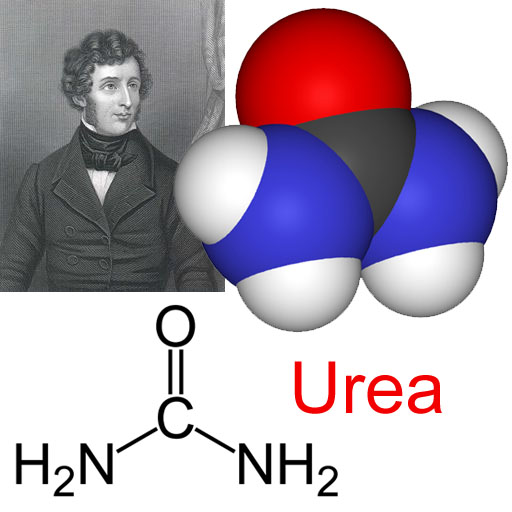
Urea in Hydroponics - Positive or Negative ?

When we supply nitrogen in our hydroponic solutions there are always a several ways in which we can fulfill our plants' needs for this nutrient. The traditional way is to supply nitrogen solely as nitrate (NO3-) salts, something which is well proven to give good results, high yield crops and better than soil growth. However it is always good to ask if a combination or the use of additional nitrogen sources may improve the outcome of our hydroponic experience. Particularly since plants in soil absorb nitrogen as nitrate and ammonia it becomes worth asking if a slow releasing source of ammonia- such as urea - would improve the yields of our hydroponic system. On this post I will write a little bit about the use of urea in hydroponics and the scientific evidence that there is to support or reject its use.

Urea is an organic molecule which slowly decomposes in water to yield ammonia and carbon dioxide. If the media is slightly acidic, the ammonia released will get protonated to form ammonium, a form of nitrogen which can be readily assimilated by most plants. Moreover, this form of nitrogen can also be processed by bacteria to yield nitrate, providing us with an additonal - slow release- mechanism for nitrate supplementation. Several research groups have asked themselves if urea would bring any significant benefits to hydroponics crops. Of particular interest was a study published by Oda et al, dealing with the effects of Urea and nitrate fertilization in hydroponics crops using both organic (peatmoss and baggasse), inorganic (rockwoll and sand) media and pure NFT systems.
-
-
After doing a study with several concentrations of Urea and Nitrate -both by themselves and combined - this research group found out that Urea does not improve crop yields in NFT systems and indeed pure nitrate does the best job when no media is in place. When media is introduced, organic media shows a faster Urea to Ammonia conversion but Ammonia to nitrate conversions are faster in inorganic media. However, the effect of Urea remains poor in the sense that nitrate-only crops outperformed almost all crops except for some plants grown with small quantities of Urea which proves to be beneficial in the same way as small additions of ammonia are already known to be.

So in the end, is it worth to add Urea to a hydroponic formulation ? The scientific evidence says that Urea does not have any clear beneficial effect that could not be gained by a small addition of ammonium salts, something which has already been confirmed by several studies done on different plant species. If you are planning on starting a new hydroponics crop adding about 5-10% of your total nitrogen as ammonium may prove to be beneficial but any addition of Urea seems completely unecessary.

Of course, further research on this subject would be needed to know the effect of nitrate/ammonium/urea combinations to know if the beneficial effects are a sole consequence of the presence of small quantities of ammonia or a virtue of the "regulatory" effects introduced by Urea as a slow release ammonium fertilizer.

Hydroponic Tomato Formulations - Nutrients for Every Growth Stage

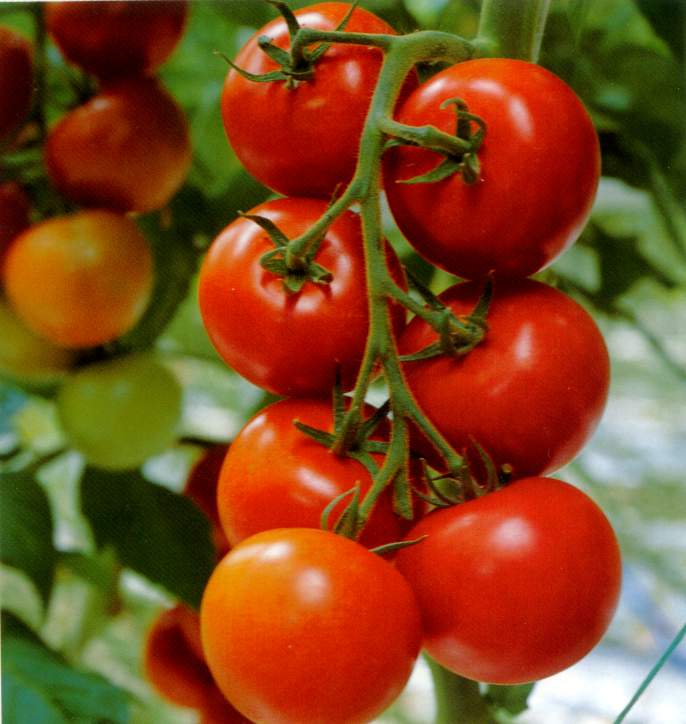
One of the most interesting things that can be done once you know how to prepare your own hydroponic nutrients (check out my free ebook on the right hand menu) is to make formulations for the different growth stages of your crops. Certainly the variation of several nutrients along the different stages of a plant's life will guarantee optimal production with better than average results. In the beginning it certainly isn't very clear how you should vary nutrients and careful care about the amounts - particularly the ratios between nutrients - have to be taken into account in order to have the best possible results. On today's post I want to talk a little bit about hydroponic tomatoes and how we can design a very specific "feeding schedule" with small modifications in our nutrient formulations for the whole growing process of this plant.

When you are growing plants, their needs are obviously not the same along all their growing stages. In a similar way as a 5 year old human doesn't need the same nutrients as a 16 or 52 year old, plants that are just germinating and plants that have been flowering or have just begun their fruiting have different nutritional needs. In tomatos, these differences manifest themselves as different demands for the different nutrients. For example, demand for magnesium, nitrogen and potassium increases as the plant grows older as more nutrients are needed to develop more live material. However some needs - such as those of micronutrients - remain fairly constant as the demand for most of these ions is not increased radically as the plant grows.
--
Of partiular usefulness to understand how to improve your tomato crop by developing a formulation schedule is a study done by the university of Florida by Hochmuth et al. The study shows the design and application of a feeding schedule to tomato crops from transplant to fifth cluster development, changing nutritional input as the plant develops. You can access this study here and look at all the different formulations developed for different stages of tomato growth. By using the ppm values provided on this study you can easily prepare nutrient solutions using the spreadsheet provided with my nutrient preparation ebook (available freely).

When you analyze the nutritional formula given above you can see how some nutrients are increased gradually while some are increased in large steps. You can also see how some ratios - like the N/K and Ca/K relationships - vital to the development of healthy tomato fruits, develop as the plants reach a more mature stage. In the beginning, small quantities of nitrogen (< 70 ppm) are available while in the end this quantity is increased to 150 ppm falling in line with the demand of a much larger fruit-producing plant.

Hopefully with the above guidance and reasearch article you will be able to start some customized nutrient scheduling for your tomato crops to improve their yields, making sure that your plants get the most out of the nutrient formulations they are using.

Wednesday, May 19, 2010

Making Your Own Hydroponic Solutions - Download my Free Ebook

Many of us have always dreamed about making our own hydroponic solutions to stop buying all those expensive solutions from the hydro fertilizer companies. Sadly, most people do not have the necessary knowledge to prepare solutions and coming up with an adequate formulation seems to be extremely difficult for almost everyone out there. As a chemist, I have the fortune of having the knowledge necessary to prepare hydroponic solutions and the initiative to teach you how to do this by yourselves in an understandable way. Through the past 6 years I have worked as a hydroponic consultant, lecturer and avid gardner and I believe this experience allows me to teach all of you how to design your own hydroponic solutions.

How do you make your own final solutions ? The first thing is to get away from the notion that doing this is extremely difficult. Certainly there are a lot of technical aspects that need to be known but I have taken them all and simplified them so that everyone can actually make their own hydroponic fertilizers with little or no practice. Within my ebook - which you can download freely at the end of this post - you will find detailed instructions on how to prepare your own hydroponic solutions using a spreadsheet I made that makes the preparation of these solutions extremely easy.
--
My ebook gives you the ability to take any formulation and easily translate it into the real amounts of chemicals you need to weight in order to prepare your final hydroponic nutrient reservoirs. All the chemicals I have included within the ebook are extremely easy to find - as they are very common fertilizers- allowing you to prepare ANY formulation you may want. You can now fulfill your dreams of preparing one solution for each separate growth stage controlling the exact amount of each single nutrient you add into the solution.

What you will find here is a very easy to use solution - made by a proffesional in chemistry - that will help you prepare fertilizers in the most cost effective yet flexible and satisfying way there is. You will now know exactly was is inside your hydroponic formulations and you will be able to pin-point and solve any nutrient related problems that may arise within your crop. You will also be able to easily discard problems as not being nutrient related since you KNOW the exact quantities of each nutrient you are putting into the solution.

So are you ready to embark yourself in the journey for total freedom and independence in the world of hydroponic nutrient solutions ? You can download my ebook here. Please leave any comments with any suggestions, questions or doubts you may have :o) Also if you want to share this ebook with anyone please direct them to my website so that they can download it themselves.

I have also recently made a great move forward by coding my own windows application to calculate hydroponic nutrient formulations. If you would like to learn more about this program and download it absolutely for FREE please follow the link shown below.
-


Hydroponic Nutrients... Why Solid is Better than Liquid

One of the most important decisions you can make when buying hydroponic nutrients for your plants is the way in which the nutrients are prepared. Fertilizers for soil-less culture are available both within solid and liquid presentations and it is very likely that you have been buying the liquid once up until now since these are the most well-known and easiest to prepare. However, you may not be realizing that by buying liquid fertilizers you are putting an enormous burdden on your hydroponic growth wallet. The fact is that by buying solid hydroponic nutrients you could be saving 5 to 10 times your hydro-food costs. Within today's post I will explain to you the difference between solid and liquid fertilizers and why buying solid nutrients is always a better choice for your hydroponic garden.

Liquid fertilizers available for hydroponics are generally prepared by dissolving an array of salts and additives in water. After these additions are done the concentrated solution is prepared and ready to be sold. When you get it the only thing you need to do is to take a given measure of volume from the liquid and poor it into your hydroponic reservoir. What you may not be realizing is that - due to the fact that salts need to be dissolved in water - there is an inherent limitation in the amount of nutrients you are getting and most of what you are buying is actually water. There is also the added cost that in order to make up a concentrated nutrient solution, compatible salts have to be used. This limits the chemicals that can be purchased and makes the cost of the fertilizer higher.

When you purchase a solid hydroponic fertilizer you simply buy a mixture of salts which you then need to weight and dissolve in a given volume of water. Since there is actually no water and the salts don't need to be predissolved in a concentrated solution, the array of salts that can be used are a lot wider and much cheaper costs can be achieved. Added to that is the fact that packing is a lot simpler and much more efficient since the need to bottle solutions is unecessary. In the end you will see that with 2 pounds of solid nutrients you will be able to prepare more than 300 gallons of nutrient solution while you would probably need much more (about 10-30 gallons of concentrated solution) to prepare the same amount using concentrated liquid fertilizers.
--
You will definitely see that most hydroponic fertilizer companies are simply charging you a lot for liquid fertilizers when you could as easily be buying bulk solid fertilizers at a fraction of the cost. Premixed solid hydroponic fertilizers are also widely available commercially and easily made up with some basic chemistry concepts (more on this on a later article!). So next time you are planning to buy more hydroponic fertilizers think about cost efficiency and look for some solid premixed hydroponic nutrients which are bound to give you as good - or better - results than your previous liquid mix.